
Roll off dumpster rental
Three container sizes, one flat rate each, and no line items invented after the fact. Delivery, pickup, disposal and seven rental days are in the number we quote you.
- Sizes
- 13, 15 and 20 yard
- Flat rate
- From $4607 days included, launch price through November 30.
- Delivery
- Next business day, same day possible
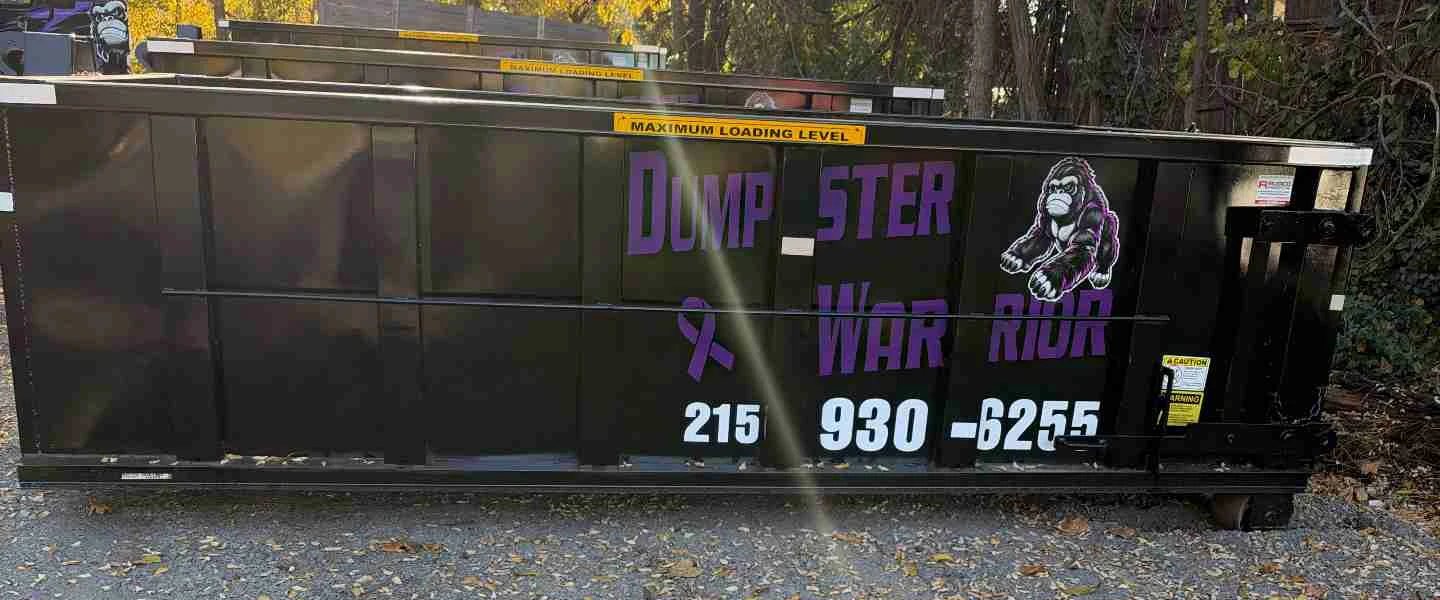
What the flat rate covers
Most of what makes a dumpster bill confusing is that the delivery, the haul-away and the tipping fee all arrive separately. Ours do not. One number covers the container dropped at your place, the week you keep it, the pickup, and the disposal at a licensed facility.
| Size | Capacity | Weight included | Rental | Flat rate |
|---|---|---|---|---|
| 13 yard | 14′ × 8′ × 3.5′, about 3 pickup loads | 1.5 tons | 7 days | $460 |
| 15 yard | 14′ × 8′ × 4′, about 4 pickup loads | 2 tons | 7 days | $500 |
| 20 yard | 14′ × 8′ × 5′, about 6 pickup loads | 2 tons | 7 days | $600 |
- $20 per day
- Extend the rental as long as the job runs.
- $125 per ton
- Overage, prorated to the tenth of a ton.
- $30
- Fuel, environmental and administrative fee.
What actually drives the final number
Three things move the price and nothing else does: the size you pick, how much the load weighs, and how long you keep it. The flat rate assumes you stay inside the tonnage allowance and inside the seven days.
Worked example. A 15-yard is $525 with two tons included. Add the $30 fuel, environmental and administrative fee and you are at $555. Go four tenths of a ton over and the overage is $50, prorated to the tenth, which puts you at $605. Keep it three days past the week at $20 a day and that is $60 more, for $665 all in.
That is the entire arithmetic. There is no separate haul fee, disposal fee or delivery fee hiding behind it, because all three are already inside the base number. If a quote from somewhere else looks lower, the first thing to check is whether disposal is in it or billed after the weigh-in.
Picking a size without overpaying
The most common mistake is renting too big because it feels safer. A 13-yard fits in a single parking space and takes the weight of dirt, concrete and roofing without getting close to the ceiling. The 20-yard is the one to pick when the volume is bulky rather than heavy, like a full room of cabinetry and flooring, because its low side walls let you load over the rail instead of up a ladder.
If you are between two sizes, tell dispatch what you are throwing out rather than guessing at cubic yards. Nobody buys dumpsters often enough to be good at estimating them, and we would rather send the right box than collect an overage.
What goes in and what does not
Furniture, household junk, construction and demolition debris, roofing shingles, yard waste and brush, non-refrigerant appliances, wood, drywall and flooring are all fine. Tires, batteries, paint, solvents, chemicals, refrigerators and AC units, medical waste, asbestos, propane tanks, hazardous and industrial waste, herbicides and pesticides, radioactive material, flammable liquids, aerosol cans, animals and sealed barrels are not.
If an item is not on either list, ask when you book. We will point you to the right disposal route even when that route is not us, because a prohibited item found at the scale house turns into a charge that neither of us wants to have a conversation about.
Container swaps and contractor work
Crews do not have a debris problem. They have a debris-in-the-way-of-tomorrow problem. A swap-out means a fresh container lands the same day the full one is pulled, so framing, drywall and demo keep moving instead of stopping while somebody stages material in the side yard.
Tell dispatch at booking if you expect to need one. A same-day swap depends on where the truck already is that morning. Arranged ahead it is routine. Called in at two in the afternoon it depends on the run.
On jobs too short or too tight to justify a container sitting there, a straight haul off the site is usually the better call. On borough streets where a roll-off would need a right-of-way permit, it is sometimes the only practical one.
Protecting the driveway
Every container goes down on boards. A loaded roll-off concentrates several tons onto four small contact points, and asphalt that has had a hot summer will take an impression from that if nothing is underneath. Boards are standard on every delivery, not an upcharge.
What to have ready when you call
Five things get you a firm number on the first call instead of the third.
The delivery ZIP. What is going in, in plain words, because nobody is good at estimating cubic yards and we would rather hear garage cleanout than a figure. Where the container is going, driveway or street, since street placement means a permit in most of the towns we serve. What the surface is, asphalt, concrete or gravel, and whether anything hangs over the spot, because the truck needs vertical clearance to raise the box and not just room to park it. And the date you need it.
That is the whole list. With those five we can price the job and schedule it in the same conversation. Without the last two we can still price it, but we cannot promise a delivery window.
Common questions
Orders placed are typically delivered the next business day, and same-day delivery is often available.
On your own driveway, most of the towns we serve do not require a permit; Jenkintown and Newtown Borough want one for any dumpster. On a public street or sidewalk most municipalities require a right-of-way permit, and the rules differ by township. Check your town page or ask dispatch and we will tell you who to call.
Overage is billed at $125 per ton, prorated, so you pay for what you actually exceed and nothing more.
Towns we cover
Bucks, Philadelphia and Montgomery Counties. If your town is not listed, ask anyway.
Bucks County
- Bensalem
- Croydon
- Doylestown
- Fairless Hills
- Langhorne
- Levittown
- Morrisville
- Newtown
- Trevose
- Tullytown
- Warminster
- Yardley
Montgomery County
Philadelphia
Services
Call, text or get a quote
Tell us the job and we will come back with a flat rate. Most containers go out the next business day, and same-day is possible.